Indiana Leads the Nation in Foreclosures — What It Means for Investors
Posted
Share this post
Facebook
Twitter
LinkedIn
Email
Indiana Leads the Nation in Foreclosures — What It Means for Investors
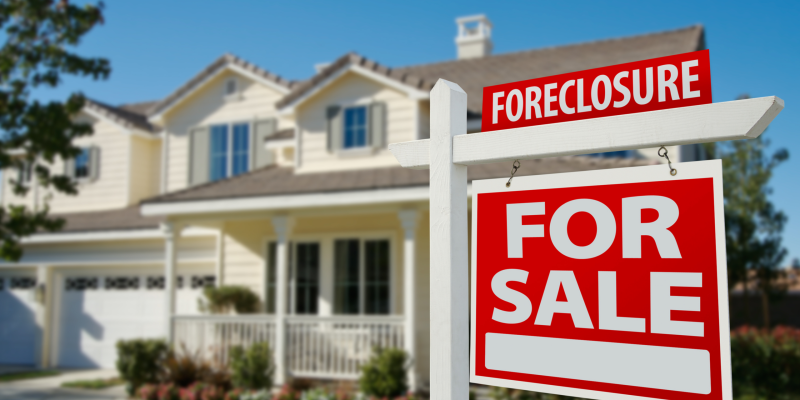
Indiana now holds the highest foreclosure rate in America — one filing for every 739 housing units in Q1 2026, nearly twice the national rate. Here's what it means for investors.
Nationwide, 118,727 properties suffered a foreclosure filing in Quarter 1 2026 — up a concerning 26% year-over-year. Foreclosure starts, meanwhile, rose 20% and bank repossessions jumped 45%. Indiana leads the pack, ahead of South Carolina and Florida. These numbers are still well below 2008 levels — Indiana saw 14,000+ quarterly filings during the Great Recession versus ~4,000 today. But the trend is moving in one direction, and investors should pay attention.
#1
National foreclosure rank, Q1 2026
1 in 739
Indiana housing units with a filing
0%
Year-over-year rise in U.S. filings
TL;DR
What state has the highest foreclosure rate in 2026?
Indiana — 1 filing per 739 housing units in Q1 2026, nearly twice the national average of 1 in 1,211. South Carolina and Florida follow closely behind.
Why is Indiana foreclosure rate so high?
Lower home values mean less equity to fall back on. Rising insurance premiums, property taxes, and utility costs are pushing already-stretched homeowners over the edge — even when their mortgage payment hasn't changed.
Is Indiana a good place to invest in real estate in 2026?
It can be — distressed properties are available at accessible price points with strong rental demand from displaced homeowners. But institutional investors are already active. The advantage goes to whoever builds a pipeline before properties hit the auction calendar.
Why Does Indiana Have So Many Foreclosures?
Three things are driving Indiana's numbers.
Why do Indiana homeowners have less equity than other states?
Indiana's median listing price is around $292,500. Lower-priced homes build equity slowly, so when hardship hits — a job loss, a medical bill, a divorce — there's no cushion. Missed payments pile up fast with nothing to fall back on.
Why are homeowners in Indiana suddenly unable to afford their payments?
Insurance premiums, property taxes, and utilities have all climbed significantly since 2021. A payment that was manageable three years ago isn't anymore — not because the mortgage changed, but because everything around it did.
What triggers most Indiana foreclosures?
The most common causes: job loss, medical bills, divorce, death of a co-borrower. What's different in 2026 is that rising everyday costs have eliminated the buffer that used to let households absorb one of those shocks and recover. A notable share of current foreclosures involve people who've owned their homes for a decade or more. This isn't speculation gone wrong — it's stable homeownership under sustained pressure.
Which Indiana Cities Have the Highest Foreclosure Rates?
Indianapolis ranks No. 12 nationally among large metros. The hardest-hit Marion County neighborhoods: Crown Hill, Near Northwest-Riverside, Maywood, Near Southside, and Martindale Brightwood. Evansville is the second most impacted city in the state.
Top State Foreclosure Rates — Q1 2026
One filing per N housing units — lower number = higher distress. Source: ATTOM.
One more thing to know: out-of-state investors already own over 20,000 homes — roughly 1 in 4 — across Hamilton, Hancock, Hendricks, Johnson, and Marion counties. You're not finding an untouched market. You're entering a competitive one.
Should I Buy Foreclosures in Indiana?
There's real opportunity here. There's also real competition and real risk. Click any row to expand it.
✓ Opportunities
Accessible entry prices+
Single-family rentals available for $80K–$150K in many Indiana markets — diversify across multiple properties for what one unit costs in a gateway city.
REO volume up 45% YoY+
Bank-owned properties are building fast. Lenders are motivated sellers — and REO purchases come with inspection access that auctions don't allow.
Pre-foreclosure pipeline+
Today's defaults become late 2026 deals. Indiana's 577-day judicial timeline gives you a window to build relationships before properties ever hit the auction calendar.
Strong rental demand+
Displaced former homeowners need somewhere to live. Indianapolis metro vacancy hit a 15-year low — the foreclosure wave is directly fueling the rental market you'd be investing into.
✕ Risks
No inspection at auction+
You bid blind. Budget 15–25% of acquisition cost for deferred maintenance surprises, and set a hard walk-away number before you're in the room — not after you win.
Institutional competition+
Out-of-state investors already own 1 in 4 homes across five Central Indiana counties. Auction prices reflect that. Off-market and pre-foreclosure sourcing is where individuals still have an edge.
Rising policy scrutiny+
Investor-owned rentals are drawing legislative attention. Aggressive fee structures and rapid rent hikes on displaced homeowners are exactly what regulators are watching.
Long judicial timeline+
Indiana's foreclosure process averages 577 days from filing to completion. Carrying costs accumulate — factor that into every acquisition underwrite.
Why Are Indiana Renters Not Buying Homes?
The monthly cost of owning a typical Indiana home has nearly doubled since 2020. Wages haven't kept up. That gap keeps would-be buyers renting — and rental demand durable. Use the slider to see how the math plays out at any price point.
Indiana Mortgage Reality Check
Adjust home price and interest rate to see the real monthly cost — and how it compares to Indiana's median income.
$248,000
6.5%
Monthly Payment
$1,580
Down Payment (10%)
$24,800
Income Needed
$63,200
Indiana median household income: $61,000 — $2,200 short
According to ATTOM's Q1 2026 report, how many Indiana housing units had a foreclosure filing?
How Do I Find Foreclosure Investment Opportunities in Indiana?
Properties entering default today become available inventory in late 2026. The investors who win here are building systems now, not chasing deals when they hit the auction calendar.
Investor Action Steps
Scroll to reveal
Build your pre-foreclosure pipeline now
Set up alerts for Marion, Hamilton, Hancock, Hendricks, and Johnson counties. Build relationships with county clerks and local attorneys before the auction calendar catches up — by then you're competing with everyone else reading the same legal notices.
Target workforce housing, not luxury
New construction skews luxury. The deepest rental demand is in 2–3 bedroom units for households earning $40K–$70K. Less competition, stronger occupancy, longer tenancies.
Look beyond Marion County
Greenwood, Noblesville, Whitestown, and Anderson are absorbing renters priced out of Indianapolis. Lower acquisition costs, growing demand, less institutional competition.
Underwrite conservatively at auction
Indiana's judicial process averages 577 days. Without interior inspection, budget 15–25% of acquisition cost for deferred maintenance. Know your walk-away number before you bid.
Treat tenant retention as a profit center
Displaced former homeowners aren't restless tenants. Responsive management and quality maintenance retain them — and every lease renewal is a turnover cost directly avoided.
The bottom line: Indiana's foreclosure wave is creating real opportunity — but it's not easy money. Build your pipeline now. The timeline is knowable. Most investors won't bother until it's obvious, which is exactly when it stops being an advantage.
Brooke is our Digital Marketing Specialist. She is responsible for the marketing of T&H Realty on all of our main media channels including social media, podcasts, and our website.
Homeowners Associations (HOAs) are established in numerous communities throughout the United States. If you live in or own a property in the Indianapolis suburbs,
It’s the time of year when all businesses are planning and forecasting for 2022. Clearly, it’s critical for all businesses to understand expected sales,