



For the better part of a decade, real estate investors chased growth. Sunbelt cities. Double-digit appreciation. Fast exits. Big headlines.
In 2026? The playbook looks different.
Investors aren’t asking “Where can I grow fastest?” anymore.
They’re asking “Where can I sleep at night?”
Welcome to the era of refuge markets and why stability is quietly outperforming flash.
What Is a Growth Market?
Growth markets are defined by rapid expansion. Think job booms, population surges, aggressive development, and outsized appreciation—until they’re not.
Classic examples over the last cycle:
-
Austin
-
Nashville
-
Phoenix
These markets delivered massive gains from 2019–2022. But they also shared some traits investors are feeling now:
-
Prices ran far ahead of local wages
-
Insurance and taxes spiked
-
Rent growth slowed while expenses didn’t
-
Exit assumptions stopped penciling
Growth markets aren’t bad. They’re just no longer forgiving.
What Is a Refuge Market?
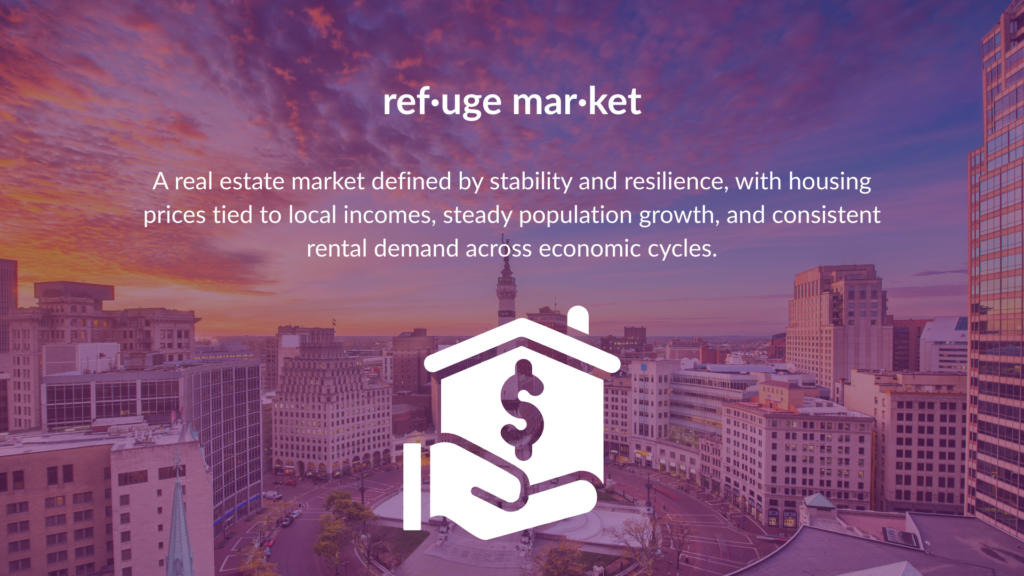
A refuge market isn’t about explosive upside. It’s about resilience.
These markets grow steadily, without the whiplash of boom-and-bust cycles. Population growth is gradual and sustainable, driven by affordability and employment rather than speculation. Housing prices tend to track local incomes, which helps keep rents realistic and demand consistent.
Refuge markets are also supported by diverse employment bases, reducing reliance on any single industry. That balance leads to stable rental demand across economic cycles.
Why Stability Is Winning in 2026
1. The Cost of Being Wrong Is Higher
Higher rates didn’t just change affordability—they raised the penalty for bad assumptions.
In 2021, you could survive:
-
Overpaying
-
Underestimating expenses
-
Weak cash flow
In 2026? Those mistakes compound fast.
Refuge markets reduce risk not by eliminating volatility—but by containing it.
2. Renters Are Staying Put
One of the most overlooked shifts: renter behavior.
In stable Midwest markets, residents are:
-
Renting longer
-
Prioritizing single-family homes over apartments
-
Valuing affordability and predictability
That consistency lowers:
-
Turnover costs
-
Vacancy risk
-
Leasing volatility
Growth markets? Renters are far more sensitive to price swings—and more likely to leave when conditions tighten.
3. Appreciation Still Happens—Just Quietly
Refuge markets don’t make headlines with 20% year-over-year gains. But they do something arguably more important:
They compound.
Slow appreciation + stable rents + controlled expenses = dependable long-term equity growth.
That’s why many seasoned investors are reallocating capital back into markets they once overlooked.
4. Insurance, Taxes, and Regulation Matter Now
Sunbelt growth markets are increasingly dealing with:
-
Rising insurance premiums
-
Property tax reassessments catching up to values
-
Regulatory uncertainty tied to fast growth
Refuge markets, especially in the Midwest, tend to see:
-
More predictable tax environments
-
Lower insurance volatility
-
Fewer reactionary policy swings
Those “boring” line items are now driving real returns.
Refuge vs. Growth: The 2026 Investor Mindset Shift
This isn’t about abandoning growth entirely. It’s about balance.
In 2026, smart portfolios often look like:
-
Core holdings in refuge markets (cash flow + durability)
-
Select exposure to growth markets (measured, not speculative)
-
A renewed focus on operations, not appreciation alone
Investors aren’t becoming conservative—they’re becoming precise.
Why Indianapolis Keeps Showing Up on Investor Radars
Indianapolis isn’t trying to be Austin. And that’s exactly the point.
What it offers instead:
-
Housing prices that still make sense relative to rents
-
A deep pool of single-family renters
-
A diverse employment base (healthcare, logistics, tech, manufacturing)
-
A market that performs in up years and down years
Final Thoughts
The last cycle rewarded speed.
The next cycle rewards stability.
In 2026, refuge markets aren’t the fallback option—they’re the strategy.
And for investors who care more about durable returns than flashy charts, that shift isn’t boring.
It’s smart.